A woman shaped by lineage and purpose
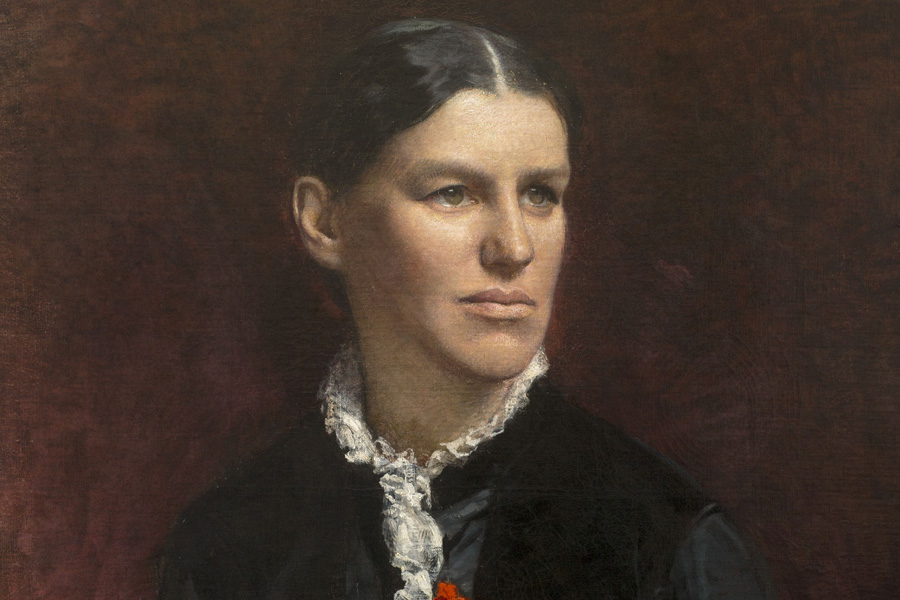
When I look at Louisa Lee Schuyler, I see a life that moved like a river with two strong currents. One current came from family, inheritance, and old New York names. The other came from action, reform, and a steady refusal to accept suffering as normal. Born on October 26, 1837, and dying on October 10, 1926, she lived nearly 89 years in a period when America was being remade by war, industrial growth, and public need. She stood at the center of that change and helped shape it.
Louisa was not just a social figure. She was a builder. She helped create institutions, guide public reform, and push social welfare into a more organized, modern form. Her work touched nursing, child welfare, hospitals, almshouses, and care for people who were often ignored by government and society. If privilege was the stage she was given, service was the role she chose.
Family roots in the Schuyler and Hamilton lines
Louisa Lee Schuyler had two prominent American families. Her parents were George Lee and Eliza Hamilton Schuyler. Through them, she acquired a family history related to early America.
Her father, George Lee Schuyler, was Schuyler. He was powerful, and his household offered Louisa schooling, connections, and a strong public persona. Eliza Hamilton Schuyler, Louisa’s mother, linked her to Alexander Hamilton and the Hamilton family. Thus, Louisa was a great-granddaughter of Alexander Hamilton and Elizabeth Schuyler Hamilton and Philip Schuyler and Catherine Van Rensselaer Schuyler. The family tree was rooted in early American history like stone.
Both of her siblings were important to her. Her older brother, Philip George Schuyler, was a soldier, clubman, and philanthropist. He reflected elite New York society. Georgina Schuyler, her younger sister, wrote and preserved. Georgina is mainly renowned for helping negotiate the placement of Emma Lazarus’s poem on the Statue of Liberty. Louisa and Georgina spent most of their adult lives in New York, suggesting a strong bond.
Her grandparents connected her to other famous people. Philip Jeremiah Schuyler and Mary Anna Sawyer supported Schuyler. Mary Morris and James Alexander Hamilton supported Hamilton. The family structure around Louisa was complicated. She navigated the vast mansion of names and obligations with duty.
There was also a striking family overlap throughout her life. Mary Morris Hamilton, Eliza’s sister, married George Lee Schuyler after her death. That meant Mary was both Louisa’s aunt and her stepmother. Family histories may be orderly on paper and complicated in life, and Louisa’s was no exception. Yet this intricacy seems to have been part of the world she inhabited rather than a distraction from it.
Education, youth, and a private start
Louisa was privately educated, and that detail matters. It tells me she entered the world with training, discipline, and exposure to ideas long before she took on public causes. She grew up with tutors and a careful upbringing near the Hamilton family estate at Dobbs Ferry on the Hudson. Her childhood was likely shaped by books, etiquette, and high expectations, but not in a cold or empty way. It was the kind of environment that could either produce decoration or resolve. Louisa became resolve.
She never married. She also had no children, at least none mentioned in the record that survives. That absence is not a blank space in her story. It is part of the shape of it. Instead of building a private household around husband and children, she built public structures around need, reform, and care. Her life moved outward rather than inward, like a lamp set in a wide window.
Public work and reform achievements
Louisa’s career began to take form during the Civil War. In 1861, she became corresponding secretary of the Woman’s Central Association of Relief in New York City. This was practical, urgent work. It involved organizing aid, supplies, and volunteer effort at a time when the nation was straining under conflict. She was not standing at the edge of history. She was helping carry it.
In 1872, she founded the State Charities Aid Association. That step is one of the most important things she ever did. She helped turn concern into structure. The association was created to inspect and improve prisons, hospitals, poorhouses, workhouses, and schools. That is the kind of reform that does not sparkle at first glance, but it changes the foundations of public life. It is architecture for compassion.
The next year, in 1873, she helped establish the Bellevue Training School for Nurses. This mattered far beyond New York. Nursing was becoming a profession, and Louisa helped push that shift forward. A profession needs training, standards, and respect. She helped make room for all three.
Her work continued through the 1870s and 1880s. In 1875, her association helped advance the Children’s Law, which removed children from poorhouses. That is a deeply humane line in the history of reform. Children should not have to grow up in places meant for abandonment. Louisa seemed to understand that institutions can either protect the weak or harden their suffering.
From 1884 to 1890, she led a campaign to move mentally ill people out of county almshouses and into state hospitals. In 1892, she helped secure a law providing separate accommodation and treatment for epileptics. Again and again, I see the same pattern in her work. She identified a neglected group, built public pressure, and helped shape the law. Her style was not dramatic in the theatrical sense. It was persistent, patient, and powerful.
In 1907, she became one of the original trustees of the Russell Sage Foundation. Between 1908 and 1915, she also worked on the National Committee for the Prevention of Blindness. In 1915, Columbia University awarded her an honorary LL.D. By then, her reputation had become a kind of public monument.
The family members around her
Louisa’s family was notable. This was linked to the early republic, New York society, and public reform.
Her father, George Lee Schuyler, gave her the socially significant Schuyler name. He came from a prestigious and responsible line.
Her mother, Eliza Hamilton Schuyler, gave Louisa the Hamilton heritage. Louisa was linked to Alexander Hamilton and the Hamilton family through Eliza.
Her brother Philip George Schuyler reflects the family’s social and philanthropic public image. He seems to fit very well in elite circles.
Her sister Georgina Schuyler shared Louisa’s single domestic life and civic activity in various ways. Georgina’s preservation and culture compliment Louisa’s social welfare. It preserved words and monuments. The other protected dignity.
Her aunt and stepmother, Mary Morris Hamilton, is fascinating. She was deeply charitable and affiliated with the family via blood and marriage. Her presence illustrates Schuyler and Hamilton families’ closeness.
James Alexander Hamilton and Mary Morris, her maternal grandparents, rooted her in the founding generation. Louisa activated their inheritance.
Her paternal grandfather, Philip Jeremiah Schuyler and Mary Anna Sawyer, joined that line. Family was more than elderly. It was remembered and active in public life.
FAQ
Who was Louisa Lee Schuyler?
Louisa Lee Schuyler was an American reformer and philanthropist known for founding the State Charities Aid Association and helping establish the Bellevue Training School for Nurses. She lived from 1837 to 1926 and played a major role in public welfare reform.
Why is Louisa Lee Schuyler important?
I would say she matters because she helped turn charity into organized public service. She worked on nursing education, child welfare, prison and hospital reform, and care for people who were often neglected by public institutions.
Who were her parents?
Her parents were George Lee Schuyler and Eliza Hamilton Schuyler. Through them, she was connected to both the Schuyler and Hamilton family lines.
Was Louisa Lee Schuyler related to Alexander Hamilton?
Yes. She was a great-granddaughter of Alexander Hamilton through her mother’s side.
Did Louisa Lee Schuyler marry or have children?
She did not marry, and no children are recorded in the material I reviewed.
Which family member was most publicly active besides Louisa?
Her sister Georgina Schuyler stands out for her cultural and preservation work, especially her role in the story of the Statue of Liberty inscription.
What is Louisa Lee Schuyler remembered for today?
She is remembered as a founder, organizer, and reformer whose work helped shape nursing, child welfare, and public charity in New York and beyond.