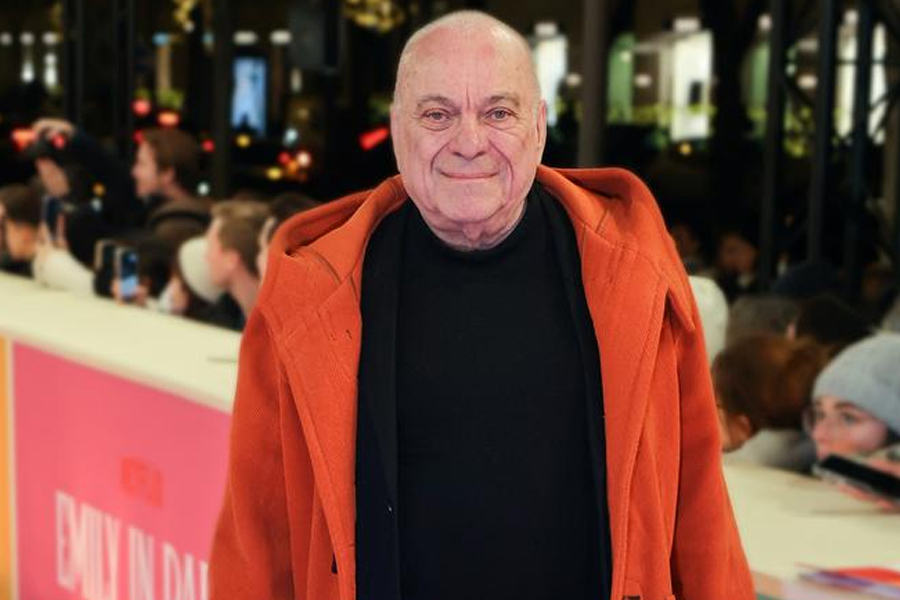
Jean Christophe Bouvet Basic Information
| Detail | Information |
|---|---|
| Full Name | Jean Christophe Bouvet |
| Date of Birth | 24 March 1947 |
| Place of Birth | Paris, 17th arrondissement, France |
| Nationality | French |
| Profession | Actor, director, screenwriter, assistant director |
| Education | Théâtre Édouard VII and Paris VIII University |
| Acting Career | From approximately 1969 to the present |
| Best Known For | General Edmond Bertineau, Jean Paul Martoni, Pierre Cadault |
| Mother | Paulette Bouvet |
| Notable Series | Emily in Paris |
| Notable Film Series | Taxi |
| Children | None publicly documented |
Jean Christophe Bouvet is one of those French actors whose face can seem instantly familiar even when his name takes a moment to place. Born in Paris on 24 March 1947, he has spent more than five decades moving between daring independent cinema, mainstream entertainment, television, theater, and international productions. His career has the texture of a long Parisian boulevard, full of unexpected turns, eccentric characters, artistic friendships, and memorable detours.
I find Bouvet particularly interesting because his career cannot easily be placed inside a single category. He has played disturbing figures, politicians, aristocrats, police and military characters, flamboyant personalities, and comic supporting roles. He has also worked behind the camera as a director, screenwriter, and assistant director. For audiences outside France, his international recognition grew considerably through his portrayal of fashion designer Pierre Cadault in Emily in Paris.
Early Life and Education in Paris
Bouvet was born in Paris’s 17th arrondissement in 1947. His artistic education began at the Théâtre Édouard VII, where he studied drama under the respected acting teacher Jean Laurent Cochet. At the same time, his intellectual interests extended beyond performance.
He studied at Paris VIII University, with interests that have been variously associated with cinema, linguistics, psychoanalysis, psychology, and modern Chinese. This mixture of theater and academic curiosity helped shape an artist who was never interested in acting as a narrowly defined profession.
During his early years, Bouvet crossed paths with important figures of French cinema, including André Téchiné and Claude Chabrol. He became an assistant director and gained experience in filmmaking from behind the camera before establishing himself as a distinctive performer.
That beginning is important because Bouvet’s career was never simply about standing in front of a camera. He learned the machinery of cinema from several angles, and that experience remained visible in the unusual choices he made throughout his career.
His Mother Paulette Bouvet
One of the clearest publicly documented members of Jean Christophe Bouvet’s immediate family is his mother, Paulette Bouvet.
Paulette Marie Louise Bouvet was born on 18 May 1914 in Montpellier and died on 24 September 2010 in Pierrefitte sur Seine. She was herself an actress, giving Bouvet a direct connection to the performing arts within his family.
Her career included work in film and television, and she also appeared in material connected with her son’s artistic work. Her presence adds an intriguing dimension to Bouvet’s biography because acting was not simply something he discovered independently as a young Parisian. His family already contained a performer.
The mother and son connection is especially interesting when considering Bouvet’s later career as both an actor and filmmaker. His artistic world therefore developed through personal experience as well as formal training.
His Father and Family Background
Information about Bouvet’s father is considerably less certain. Some biographical accounts describe him as an architect who supposedly designed three bridges in Paris. This detail has circulated in different versions of his biography, but it is not as consistently documented as the information about his mother.
For that reason, it is better to treat the architectural connection as a biographical detail rather than an established centerpiece of his family history.
There is also very little reliable public information about siblings. Bouvet has maintained a degree of privacy around his family, and there are no widely documented details establishing a larger immediate family network.
His private life has often attracted more attention than his family genealogy, particularly because of his unusually candid discussions about sexuality and personal freedom.
Personal Life and Views on Sexual Freedom
Bouvet has called himself “trisexual.” in interviews. His odd association with heterosexuality, homosexuality, and autoeroticism is intentional.
In his public life, he has advocated sexual and artistic freedom. He has written about sexual exploits with men and women, differentiating them from romantic connections.
Bouvet also calls actress Fanny Ardant his ideal woman. His sexuality discussions are straightforward and controversial, like his unique cinema choices.
No spouse or long-term romantic partner is publicly documented, and no children are. Despite his openness about his personal life, Bouvet’s family tale remains secret.
The Films That Established His Reputation
Bouvet’s early filmography developed within the more experimental side of French cinema. One of his notable early appearances was Change pas de main in 1975, directed by Paul Vecchiali. The controversial film contained sexually explicit material and reflected the provocative filmmaking culture of the period.
In 1977, Bouvet took a major role in Vecchiali’s La Machine, playing Pierre Lentier, a man condemned to death for the murder of a child. The performance represented an important step in his development as a serious character actor. Bouvet also contributed to the text associated with the film.
His collaboration with Vecchiali became one of the defining relationships of his career. He also became closely associated with Jean Claude Biette and worked with a remarkable range of French directors.
From Auteur Cinema to Popular Film
During the 1980s and 1990s, Bouvet continued to move between demanding auteur projects and more accessible productions.
He appeared in Maurice Pialat’s Sous le soleil de Satan in 1987, playing the horse dealer associated with the film’s Satanic imagery. He also worked with directors such as Raoul Ruiz and André Téchiné.
In 1992, he appeared in Cyril Collard’s Les Nuits fauves. Two years later came one of his most recognizable French comic performances in La Cité de la peur, where he played the corrupt politician Jean Paul Martoni.
This role demonstrated another side of Bouvet. The same actor capable of inhabiting dark or psychologically unsettling characters could also deliver comedy with an unmistakable screen presence.
The Taxi Years and General Edmond Bertineau
For many French viewers, Bouvet became especially recognizable through the Taxi films.
He played General Edmond Bertineau in Taxi 2 in 2000, followed by Taxi 3 in 2003 and Taxi 4 in 2007. The character is the father of Marion Cotillard’s character, creating another memorable connection between Bouvet and a major French star.
The Taxi films gave Bouvet exposure to a much broader audience than many of his earlier auteur projects. His career suddenly contained a bridge between experimental cinema and popular French entertainment.
That balance would remain characteristic of his work. Bouvet could move from an art house production to a commercial comedy without seeming confined by either world.
International Work and Marie Antoinette
Bouvet’s career also brought him into contact with internationally recognized filmmakers.
In Sofia Coppola’s Marie Antoinette in 2006, he played the Duc de Choiseul. The film placed his distinctive French screen presence inside an elaborate period production featuring lavish costumes, aristocratic settings, and an international cast.
He also appeared in Jean Luc Godard’s Notre musique in 2004 and worked with Claude Chabrol. These collaborations strengthened his reputation as an actor capable of fitting naturally into very different cinematic languages.
His filmography eventually grew to more than 100 credits, encompassing feature films, television programs, shorts, and other screen work.
Jean Christophe Bouvet as Pierre Cadault
A new generation of viewers encountered Bouvet through Netflix’s Emily in Paris.
Beginning in 2020, he portrayed Pierre Cadault, the flamboyant and highly recognizable French fashion designer. The character gave Bouvet a new international audience and allowed him to combine his natural theatricality with the glamorous visual world of fashion.
Pierre Cadault is eccentric, proud, dramatic, and occasionally vulnerable. Those qualities make the role particularly suited to Bouvet’s established screen persona.
For international audiences, Emily in Paris effectively became another doorway into a career that had already been unfolding in French cinema for half a century.
Directing, Writing, Theater, and Other Artistic Work
Bouvet’s creative activities extend beyond acting. He directed and wrote short films including Les Dents de ma mère, released in 1991, along with earlier projects such as En veux-tu, en voilà, En voilà 2, La Relève, and Et de trois.
His early assistant director work also included connections with filmmakers such as André Téchiné and Claude Chabrol.
Theater has remained another part of his artistic life. He has participated in productions and adaptations including Orange mécanique and Toc toc. His work therefore forms a broad creative circle rather than a simple acting résumé.
He even became part of the visual art world through Orlan’s 1989 work L’Origine de la guerre, demonstrating how unusual his artistic career could become.
Career Timeline
| Year | Career Milestone |
|---|---|
| 1947 | Born in Paris |
| 1960s to 1970s | Drama training and university studies |
| 1969 onward | Early film and assistant director work |
| 1975 | Appeared in Change pas de main |
| 1977 | Major role in La Machine |
| 1987 | Appeared in Sous le soleil de Satan |
| 1992 | Appeared in Les Nuits fauves |
| 1994 | Played Jean Paul Martoni in La Cité de la peur |
| 2000 | Joined the Taxi series |
| 2004 | Appeared in Godard’s Notre musique |
| 2006 | Played Duc de Choiseul in Marie Antoinette |
| 2010s | Continued film, television, and theater work |
| 2020 | Began appearing as Pierre Cadault in Emily in Paris |
| 2023 | Appeared in Mon crime |
| 2025 | Continued screen work including La Tournée |
| 2026 | Remained associated with ongoing film and television activity |
Recognition and Acting Style
Bouvet has attracted unusually strong praise from critics. Louis Skorecki famously referred to him as the “greatest actor in the world,” while Serge Kaganski compared him to Jean Pierre Léaud of the post New Wave generation.
Those descriptions capture something essential about Bouvet’s appeal. He is rarely anonymous even when playing a supporting role. His physical presence, voice, expressions, and ability to suggest something slightly strange beneath the surface can make a brief appearance linger in the memory.
He has often played disturbing, shady, eccentric, or complicated characters. Yet his range is broader than those labels suggest. Comedy, drama, historical cinema, television, fashion, theater, and experimental film have all found room in his career.
Financial Status and Public Profile
Despite his enormous number of credits, Bouvet’s personal finances remain private. There are no reliable public figures establishing his net worth, annual salary, property holdings, or accumulated wealth.
His career is better understood through longevity and artistic variety than celebrity wealth. More than five decades of continuous work have made him a durable figure in French entertainment, but he has never been primarily marketed as a conventional blockbuster leading man.
His public identity has instead grown around character, personality, and the unusual ability to make supporting roles memorable.
Jean Christophe Bouvet Today
Bouvet continues working in his 70s. Film, television, fashion, interviews, and Emily in Paris have kept him internationally known in the 2020s.
His Instagram account, @jeanchristophebouvet, features personal posts and posts on cinema, fashion, contemporary culture, and work.
His career follows his varied route from decades ago. He can be in fashion, a French comedy, an independent film, or a play.
FAQ
Who is Jean Christophe Bouvet?
Jean Christophe Bouvet is a French actor, director, screenwriter, and former assistant director born in Paris on 24 March 1947. He is known for French films such as La Cité de la peur and the Taxi series, as well as Emily in Paris.
Who is Jean Christophe Bouvet’s mother?
His mother was Paulette Bouvet, a French actress born on 18 May 1914 in Montpellier and deceased on 24 September 2010 in Pierrefitte sur Seine.
Does Jean Christophe Bouvet have children?
No children are publicly documented in the available biographical record.
Who did Jean Christophe Bouvet play in Taxi?
Bouvet played General Edmond Bertineau in Taxi 2, Taxi 3, and Taxi 4. The character is the father of Marion Cotillard’s character.
Who does Jean Christophe Bouvet play in Emily in Paris?
He plays Pierre Cadault, an eccentric and celebrated French fashion designer who becomes an important recurring character in the series.
What was Jean Christophe Bouvet’s major breakthrough?
His major early dramatic breakthrough came with La Machine in 1977, directed by Paul Vecchiali, while wider French popular recognition later came through La Cité de la peur and the Taxi films.
Was Jean Christophe Bouvet also a director?
Yes. Bouvet directed and wrote several short films, including Les Dents de ma mère in 1991, and began his career with experience as an assistant director.
Who was Jean Christophe Bouvet’s father?
Some biographical accounts describe his father as an architect who designed three Paris bridges, but this detail is less firmly documented than the information about his mother.
What is Jean Christophe Bouvet known for?
He is known for his distinctive character acting, collaborations with major French auteur filmmakers, General Edmond Bertineau in the Taxi series, Jean Paul Martoni in La Cité de la peur, and Pierre Cadault in Emily in Paris.